The achievement for which he will always be remembered was to show how first carbon, and then all the heavier elements, had been created by thermonuclear reactions inside stars whose explosive ends then scattered them through space – it is thanks to Hoyle that we now know that we are, literally, made of stardust. In the late 1940s, after wartime work on naval radar, he developed the ‘steady state’ theory of the universe which was soon challenged by the rival ‘big bang’ theory, leading to a bitter dispute between Hoyle and his rivals at Cambridge and elsewhere.
Hoyle, a man of relentless energy, also wrote best-selling books of popular science, science-fiction novels, including a classic, The Black Cloud, and the BBC TV series A for Andromeda. These activities, coupled with his courting of controversy and his frequent forays beyond the boundaries of his own discipline, aroused both suspicion and envy among some of his academic contemporaries, especially in Britain. Tragically, when misunderstandings arose over the fate of the Institute of Theoretical Astronomy in Cambridge, which Hoyle had founded and made into a centre of international repute, he chose to quit the university in protest.
In semi-retirement, he continued to produce books and scientific papers on a wide range of topics – ‘trespassing’ into areas such as archaeology and palaeontology where he was distinctly unwelcome. Towards the end of his career he espoused the idea of panspermia, the seeding of life from outer space &ndash a theory now more ‘respectable’ than it was at the time.
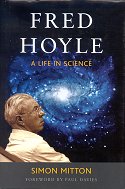
This is a major scientific biography of one of the greatest, and best-known, scientists of the twentieth century, written in a style that will be immediately accessible to a general readership.