Elizabeth Vandiver.
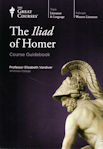
The Iliad of Homer.
Great Courses. 1999
rating : 3 : worth reading
review : 22 February 2026
This is the course guidebook that accompanies the 12 lecture “Great Course” of the same name. It is essentially an abbreviated transcript of each lecture, a few pictures, and some related reading. (I watched the lectures, which is what I am reviewing here, and am using the book simply as an aide-memoire.)
Here we have a literary discussion of the Iliad, along with a bit of history (was there a Homer? What was life like in the period?) The discussion of why Achilles’ initial snit (or ‘wrath’) makes perfect sense given the historical context (even if that context is somewhat appalling) is interesting. An analysis of various key scenes follows, and there is some great discussion of fate, the role of the various gods, and the sympathetic portrayal of the enemy Trojans. Vandiver clearly relishes her subject, and I learned a lot.
Even if Achilles’ initial wrath is justified, given his later behaviour, I still think he’s a jerk.