Books

Books : reviews

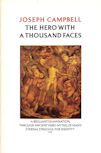
Joseph Campbell.
The Hero with a Thousand Faces.
Fontana. 1949

Despite their infinite variety of incident, setting, and costume, the myths of the world offer only a limited number of responses to the riddle of life.

In this fascinating and influential book, Joseph Campbell presents the composite hero. Apollo, the Frog King of the fairy tale, Wotan, the Buddha, and numerous other protagonists of folklore and religion enact simultaneously the various phases of their common story.

The relationship of their timeless symbols to those discovered in dream by contemporary depth psychology is taken as a starting point for interpretation. The psychological view is then compared with the words of such spiritual leaders as Moses, Jesus, Mohammed, Lao-tse, and the ‘Old Man’ of the Australian tribes. From behind a thousand faces the single hero looks out, archetype of all human myth.
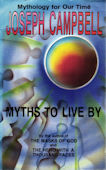
Joseph Campbell.
Myths to Live By.
Souvenir Press. 1972

One of the great authorities on the study of myth, whose monumental four-volume work on the world’s mythologies, The Masks of God, is a classic of its genre, reveals in this illuminating and incisive book how the myths that motivated pre-scientific societies still have relevance for us today.

The old myths were a way of explaining the cosmos and the origins of humanity with ideas now long superseded by scientific discoveries, but they also played a vital cohesive role in society. Joseph Campbell suggests that by a psychological analysis of myths we can come to an understanding of their essential qualities and see how they continue to reflect human needs and assuage anxieties.

Ranging from Zen koans and Indian aesthetics to schizophrenia and walking on the moon, he shows that throughout time and space, myth and religion have followed the same archetypes which cannot be regarded as exclusive to any one people, region or religion. We must recognise their common factor and allow this knowledge to help us in fulfilling human potentials everywhere.