Books

Books : reviews

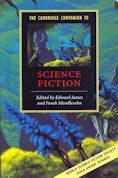
Edward James, Farah Mendlesohn.
The Cambridge Companion to Science Fiction.
CUP. 2003

Science fiction 1s at the intersection of numerous fields. It is a literature which draws on popular culture, and which engages in speculation about science, history, and all types of social relations. This volume brings together essays by scholars and practitioners of science fiction, which look at the genre from these different angles. It examines science fiction from Thomas More to the present day, and introduces important critical approaches including Marxism, postmodernism, feminism and queer theory. A number of well-known science-fiction writers contribute to this volume.

Farah Mendlesohn, ed.
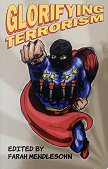
Glorifying Terrorism.
Rackstraw Press. 2006

rating : 3.5 : worth reading
review : 12 April 2007

The UK's Terrorism Act 2006 states (among other things):

The Terrorism Act specifically aims to make it more difficult for extremists to abuse the freedoms we cherish, in order encourage others to commit terrorist acts.
     The Act creates a number of new offences. Once it is brought into force, it will be a criminal offence to commit: creates a number of new offences. Once it is brought into force, it will be a criminal offence to commit:

  • ...
  • Encouragement to Terrorism
    This makes it a criminal offence to directly or indirectly incite or encourage others to commit acts of terrorism. This will include the glorification of terrorism, where this may be understood as encouraging the emulation of terrorism.
...
For the purposes of this section, the statements that are likely to be understood by members of the public as indirectly encouraging the commission or preparation of acts of terrorism or Convention offences include every statement which (a) glorifies the commission or preparation (whether in the past, in the future or generally) of such acts or offences ...
...
It is irrelevant ... whether any person is in fact encouraged or induced by the statement to commit, prepare or instigate any such act or offence.

This collection of science fiction short stories was specially commissioned for the purpose of protesting the Act, for demonstrating how ludicrous and useless such a law is, and of exercising one of those very "freedoms we cherish".

Given the genesis, it's not surprising that the stories range in quality, in science fictional content, and in outrage. Some I frankly don't get the point, some are quite unpleasant, and some are extremely good. No mention of Robin Hood, though -- maybe that's too easy a target?

The final story, Charlie Stross' contribution, encapsulates the whole point and context to tremendous effect: it should be required reading for everyone who voted for Act, and for everyone who prates "if you have nothing to hide you have nothing to fear". It is every good citizen's civic duty to buy this book.

Contents

• Andrew McKie. Introduction. 2006
• Jo Walton. The Comrades Decide to Continue Their Struggle. 2006
• Ian Watson. Hijack Holiday. 2001
• Vylar Kaftan. Civilization. 2006
• Kira Franz. The Lion Waiting. 2006
• Davin Ireland. Engaging the Idrl. 2006
• Ken MacLeod. MS Found on a Hard Drive. 2006
• James A. Trimarco. The Sundial Brigade. 2006
• Elizabeth Sourbut. 'How I took care of my pals.'. 2006
• Gwyneth Jones. 2020: I AM AN ANARCHIST. 2006
• Kari Sperring. Strong Brown God. 2006
• Lucy Kemnizter. John Brown's Body (an alternate history). 2006
• Katherine Sparrow. Be the Bomb you Throw. 2006
• Marie Brennan. Execution Morning. 2006
• Adam Roberts. Here Comes the Flood. 2006
• Kathryn Allen. Count Me In.. 2006
• Hal Duncan. The Last Straw. 2006
• Rachel Swirsky. The Debt of the Innocent. 2006
• Lavie Tidhar. Bophuthatswana. 2006
• Van Aaron Hughes. Winning Friends. 2006
• Chaz Brenchley. Freecell. 2006
• H. H. Loyche. The Rural Kitchen. 2006
• Ian Whates. The Laughter of Ghosts. 2006
• Suzette Haden Elgin. What We Can See now, Looking in the Glass. 2006
• Una McCormack. Torch Song. 2006
• Charles Stross. Minutes of the Labour Party Conference, 2016. 2006
Farah Mendlesohn.
Rhetorics of Fantasy.
Wesleyan University Press. 2008

Transcending arguments over the definition of fantasy literature, Rhetorics of Fantasy introduces a provocative new system of classification for the genre. Utilizing nearly two hundred examples of modern fantasy, author Farah Mendlesohn uses this system to explore how fiction writers construct their fantastic worlds. Mendlesohn posits four categories of fantasy—portal quest, immersive, intrusion, and liminal—that arise out of the relationship of the protagonist to the fantasy world. Using these sets, Mendlesohn argues that the author’s stylistic decisions are then shaped by the inescapably political demands of the category in which they choose to write. Each chapter covers at least twenty books in detail, ranging from nineteenth-century fantasy and horror to extensive coverage of some of the best books in the contemporary field. Offering a wide-ranging discussion and penetrating comparative analysis, Rhetorics of Fantasy will excite fans and provide a wealth of material for scholarly and classroom discussion.

Edward James, Farah Mendlesohn.
The Cambridge Companion to Fantasy Literature.
CUP. 2012

Fantasy is a crestion of the Enlightenment, and the recognition that excitement and wonder can be found in imagining impossible things. From the ghost stories of the Gothic to the zombies and vampires of twenty-first-century popular literature, from Mrs Radcliffe to Ms Rowling, the fantastic has been popular with readers. Since Tolkien and his many imitators, however, it has become a major publishing phenomenon. In this volume, critics and authors of fantasy look at its history since the Enlightenment, introduce readers to some of the different codes for the reading and understanding of fantasy, and examine some of the many varieties and subgenres of fantasy; from magical realism at the more literary end of the genre, to paranormal romance at the more popular end. The book is edited by the same pair who produced The Cambridge Companion to Science Fiction (winner of a Hugo Award in 2005).

Farah Mendlesohn.
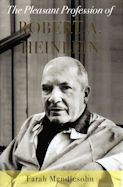
The Pleasant Profession of Robert A. Heinlein.
Unbound. 2019

Robert A. Heinlein began publishing in the 1940s at the dawn of the Golden Age of science fiction. Today he is considered one of the genre’s ‘big three’ alongside Arthur C. Clarke and Isaac Asimov. His short stories were instrumental in developing science fiction’s structure and rhetoric, while novels such as Stranger in a Strange Land and Starship Troopers demonstrated that such writing could be a vehicle for political argument.

Heinlein’s influence remains strong, but his legacy is fiercely contested. His vision of the future was sometimes radical, sometimes deeply conservative, and arguments have flared up recently about which faction has the most significant claim on his ideas.

In this major critical study, Farah Mendlesohn carries out a close reading of Heinlein’s work, including unpublished stories, essays and speeches. It sets out not to interpret a single book, but to think through the arguments Heinlein made over a lifetime about the nature of science fiction, about American politics, and about himself.