This is the heady story of over ten years of excavation at the world’s best preserved early human site, told through the experiences of those who were there. Mark Roberts and his team opened a unique window on life in Britain half a million years ago. As the dig reached its thrilling climax, they uncovered evidence that questioned who we are and where we came from. Boxgrove Man lived in a warm period of the Ice Age, a ‘fairweather Eden’ with lions and elephants. Was he the simple-minded scavenger traditionally envisaged by archaeologists, or the primitive beast of popular imagination? The answers from Boxgrove astonished archaeologists.
Mike Pitts presents ten astounding archaeological discoveries that shed new light on those who came before us, and radically altered the way we think about our history. His compelling, sometimes teasing, archaeological odyssey illustrates the diversity, complexity and sheer strangeness of the lives that represent Britain’s past.
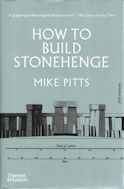
There has been endless speculation about why Stonehenge was built, inspiring theories ranging from the academically credible to the improbable, but far less investigation into how. In the millennia since its creation, pieces of Stonehenge have been knocked over by heavy machinery, found their way to Florida (and back again), and been exposed to radioactive sodium, but the seemingly impossible endeavour of raising the stones with Neolithic technology has remained inexplicable – until now.
In the past decade ground-breaking discoveries, made possible by cutting-edge scientific techniques, have traced the precise provenance of the bluestones in Wales, but can we plot their journeys to the Salisbury Plain? And how might teams of labourers lacking machinery or even pack animals have dragged them 200 miles to the site? How did they carve joints into the sarsen boulders, among the hardest stones in the world, and then raise them into place? Mike Pitts draws on a lifetime’s study to answer these questions, revealing how Stonehenge stood not in austere isolation, as we see it today, but as part of a wider world, the focus of a megalithic cosmology of belief, ritual and creativity.