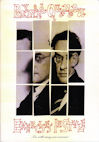
Raymond Queneau.
Exercises in Style.
New Directions. 2012
rating : 5 : waste of time
review : 4 August 2026
Exercises in Style, Queneau’s masterpiece, retells this unexceptional tale in ninety-nine exceptional ways: the sonnet and the alexandrine, onomatopoeia, even Cockney. Celebrating the 65th anniversary of the book’s original French publication, this edition includes many additional exercises by Queneau, newly translated by Chris Clarke and appearing for the first time in English, as well as new homages by contemporary writers.
Translated by Barbara Wright with new exercises translated by Chris Clarke
and exercises in homage to Queneau by Jesse Ball, Blake Butler, Amelia Gray, Shane Jones, Jonathan Lethem, Ben Marcus, Harry Mathews, Lynne Tillman, Frederic Tuten, and Enrique Vila-Matas
A short, uninteresting story is retold in a multitude of styles. The uninterestingness is necessary so that the stylistic choices are foregrounded.
This is the review that demonstrates that I am a Philistine. I not only did not enjoy this, I didn’t see the point. I don’t know if it merely lost its point in translation, but I suspect not. I suspect, rather, that I was being too … logical? … literal? I was expecting examples of different prose styles rather like the ones described in Clear and Simple as the Truth: writing classic prose, or even poetic styles as mentioned in The Ode Less Travelled; I was expecting to learn something about those styles. Instead, there are many non-styles (is "Cockney" or "Dog Latin" a style, or just some sort of dialect?), and even non-sense (anagrams, permutations) entries. Maybe I should have approached it more light-heartedly, looking for wit rather than learning? But most of the entries seem ponderous and dull rather than witty, and there is also an underlying sexism and homophobia in some (the originals were published in 1958, so maybe that is not unexpected?) which detracts from any such enjoyment. Anyhow, I was not engaged, and frankly skimmed many of the entries.