Biography
"The elegance of
Ligeti and the gritty intensity of Kurtág, a
fascinating combination. I get
the sense of pure music in a serious vein, its composer
driven only by an internal need to express himself."
James H. North,
Fanfare Magazine, USA 2008
"Simaku's idiom
combines avant-gardism and modality in a manner all
its own." Avangarde und Ethnologie vereint, by Frank Kämpfer,
Deutschlandfunk, Cologne, 2008
"Power is
certainly the mot
juste here, as
even in the moments that veer towards silence there is an
awareness of the explosive potentialities of the musical
surface. As on all the works presented here, the sure
voice of the composer is never in doubt." Colin
Clarke, 2009 Cambridge University Press, Tempo 63
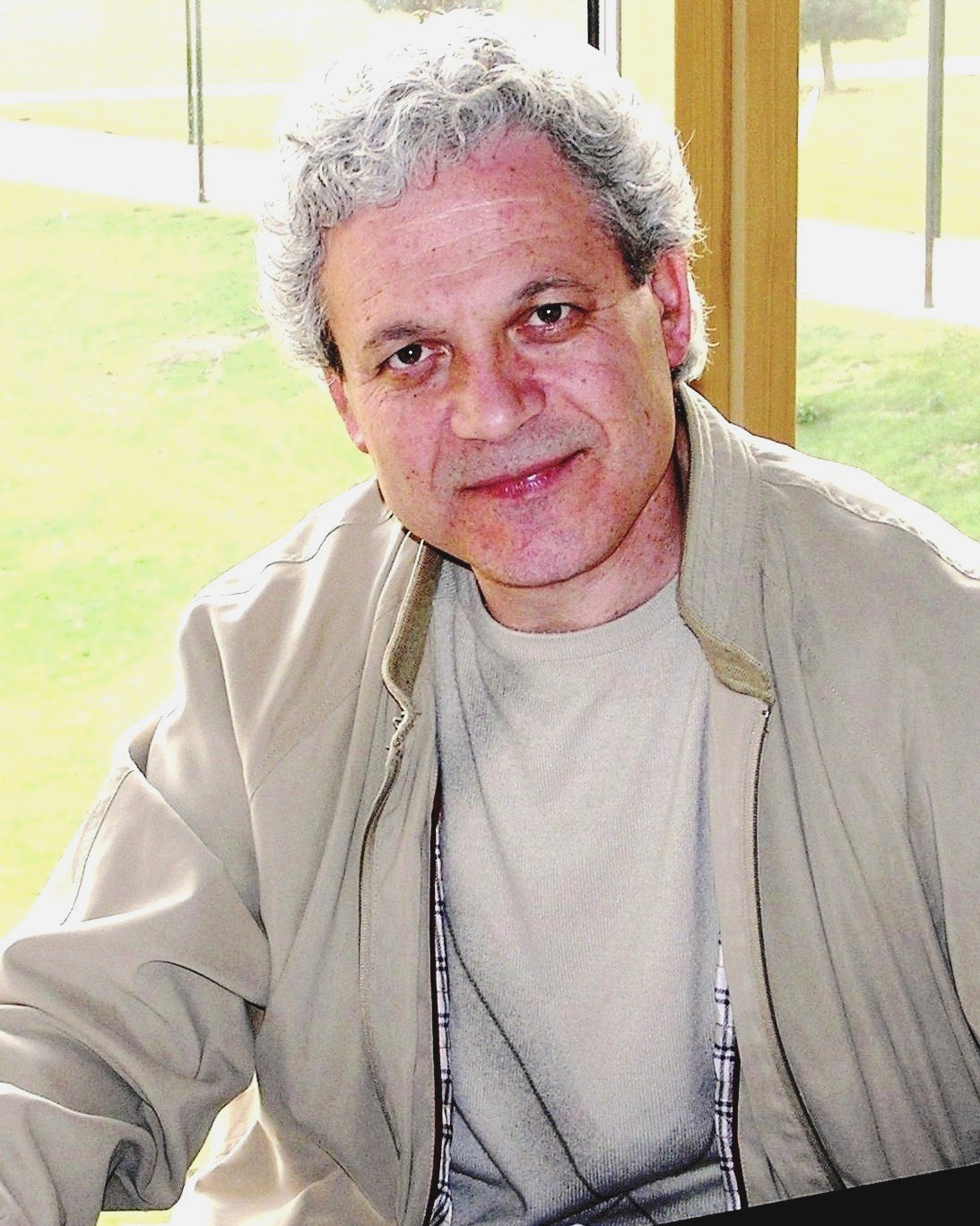
The Albanian-born British composer, Thomas
Simaku (b.1958)
began his composition studies with Tonin Harapi at the
Tirana Conservatoire. After graduating in 1982, he gained
first-hand experience working with folk musicians for a
period of three years in the remote town of Permet in
Southern Albania near the border with Greece .In 1991 he
moved to England and gained a PhD in Composition at the
University of York (1991-96) where he studied with David
Blake. He also was the 1996 Leonard Bernstein
Fellow in Composition at Tanglewood Music Centre in the USA
with Bernard Rands, and a fellow at the Composers’ Workshop
- California State University (1998) with Brian Ferneyhough.
Simaku's music has been
reaching audiences across Europe, the USA and further afield
for more than two decades, and it has been awarded a host of
accolades for its expressive qualities and its unique blend
of intensity and modernism. His works have been selected by
international juries in no less than nine editions of ISCM
World Music Days; other international festivals where his
music has been performed include Huddersfield, Tanglewood,
Miami, Zagreb-Biennale, Weimar, Munich, Rome, Viitassari
(Finland), Alea III Boston, Beijing, Innsbruck (Austria),
Warsaw Autumn, etc.
Performed by renowned soloists, ensembles and orchestras,
his music has been broadcast worldwide, including radio
stations such as BBC Radio 3, SWR2, MDR, Deutschlandfunk
(Cologne), Amsterdam Radio 4, ORF (Austria), Australian
Broadcasting Corporation (ABC), RNE (Spain), RTP (Portugal),
etc. His CD released on Naxos 21st Century Classics series
in 2008 received much critical acclaim; it reached the best
of year list in the USA.
Prestigious awards include
the coveted Lionel Robbins Memorial Scholarship in 1993,
First Prize of the 2004 Serocki International Competition, a
Leverhulme Research Fellowship, and a three-year fellowship
from Arts & Humanities Research Council in London. In
2009 Simaku received a British Composer Award from BASCA for
his Soliloquy V - Flauto Acerbo, which the judging
panel described as 'visionary and entirely original'. With
this work he represented the UK at the 2012 ISCM Festival in
Belgium.
Notable performances include, among others, those given by the Kreutzer Quartet, Arditti Quartet, Quatuor Diotima, English Northern Philharmonia, European Union Chamber Orchestra, Warsaw Philharmonic, MusikFabrik, Kreutzer Quartet, Amsterdam New Music Ensemble, the New London Orchestra, Slovenian Radio-Television Orchestra, Tokyo Phonosphere Musicale, Insomnio Ensemble, Polish Radio Chamber Orchestra, Rubinstein Quartet, Copenhagen Sinfonietta, Concorde (Dublin), Luxembourg Sinfonietta, Romanian Radio Chamber Orchestra, Capricorn Ensemble, Norwegian Medieval Trio, Tyrolean Ensemble of New Music (TICOM) etc. Simaku's music is published by University of York Music Press and Emerson Edition.
Thomas Simaku has given
lectures and presentations on his music at a number of
Universities and Academies, including King's College and
Royal Academy of Music in London, 'Hanns Eisler' Academy in
Berlin, Vienna Conservatoire, Hong Kong University, the
Chinese University of Hong Kong, Beijing Normal University,
Prague Academy of Arts, Leeds University and Birmingham
Conservatoire. In 2000 he was granted British Citizenship
and now lives in York with his wife and two daughters.
Thomas Simaku holds a senior position as Reader in Music at
the University of
York.
"The works recorded here confirm my early impressions when I first heard some of Simaku's music. Here is a composer who obviously has things to say and who knows how to say them best". Hubert Culot, MusicWeb International, 2008 on Naxos CD.
"It is barely conceivable that two voices, accompanying and contrasting one another, and each laden with different associations, are both played by one and the same bow." Frank Kämpfer, Deutschlandfunk, Cologne, 2008. (read the full review) on Due Sotto Voce per Violino Solo
"an imaginative and captivating piece." ISCM - World New Music Magazine, July 2006 on Hyllus for Orchestra
"...a piece of controlled, dramatic and surprisingly individual power." Keith Potter, Tempo, Cambridge, April 2005 on Hyllus for Orchestra
"...the work's periodic climactic outbursts achieved striking effect." The Guardian, 2005 on Radius for 11 solo strings
"...Rèflexions de la Croix III was the only work in the concert which demonstrated a real individual charisma." Stuttgarter Nachrichten, 2006
"A piece of unaccompanied violin writing which brings out the instrument's genius for passionate expression, fully realised in the young Luxembourg violinist Vania Lecuit's riveting interpretation." Peter Graham Woolf - Seen & Heard, London - review of the ISCM Festival, Luxembourg 2000 on Soliloquy I
"...Soliloquy III for solo viola [...] explores a wide range of high harmonics and microtonal effects, rapidly switching from violent chordal attacks to spare bowed fragments, reminiscent of Georgy Kurtag in its spare atomistic compression." Sun-Sentinel, Florida
"The technical command, dramatic pacing and vivid orchestration made for a seriously impressive musical essay with a real sense of purpose and outrage." Yorkshire Evening Press, 1999 on The Eagle on the Cross