Books

Short works

Books : reviews

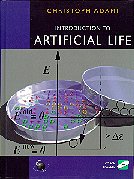
Christoph Adami.
Introduction to Artificial Life.
Springer. 1998

rating : 3.5 : worth reading
review : 23 May 1998

Most of the books I've read so far about self organising systems and artificial life have tended to be mathematics based (fractals, measure theory, ...), or biology based (DNA, amino acids, genetic algorithms, ...). This one in firmly in the physics camp (statistical thermodynamics, entropy, ...). It does require an understanding of these concepts.

There is a good description of statistical information theory and entropy, emphasising that information is always measured with respect to something. An evolving string encodes information about its environment; put it in a different environment, and the information disappears. (Jack Cohen would appreciate this point: he is always emphasising that the information is not "all in the DNA", but that the environment is which the DNA is expressed is just as important.) How the environment is encoded in a string is well explained.

The book presents a good mix of theoretical and experimental results. It comes complete with a CD-ROM of avida, a tierra-esque artificial life system, so readers can pursue their own experiments, evolving strings of instructions, and imposing selection criteria.

Throughout, the emphasis is on mutation, bit flipping, as a means of evolving asexually replicating strings. (The strings are self-replicating code fragments, so a small change to the code could cause the next generation to change enormously, but this did not seem to be investigated much.) Experience with genetic algorithms, however, indicates that sexual cross-over is a significant driver of evolution, and I would have liked to have seen more about that. (There is a small section on using cross-over to determine if strings are members of the same species, by asking if a cross-over 'child' can still self-replicate. But these 'children' are not the strings that go on to evolve.)

Also, most of the experiments are conducted on static fitness landscapes, where the fitness is determined solely by the 'artificial chemistry' as captured by the meaning of the alife code instructions, and an externally imposed fitness function, such as being able to calculate an arithmetical result. There is only passing reference to co-evolution, where the rest of the population affects the fitness landscape (if your food source goes extinct, you could do so, as well). However, one aspect I did like was the idea of a fractal fitness landscape, which, as you look more closely, always has new peaks, new ways of going uphill. There is no global optimum in such an infinite landscape, hence no idea of having reached "perfection", or the pinnacle of evolution.

So all in all, I would say this is a good introduction from one perspective only, that of conditional information and entropy, but is by no means a full introduction to the subject.
Christoph Adami, Richard K. Belew, Hiroaki Kitano, Charles E. Taylor, eds.
Artificial Life VI: proceedings of the sixth international workshop on the synthesis and simulation of living systems, UCLA.
MIT Press. 1998

(read but not reviewed)

Contents

• Gerald F. Joyce. What's Evolving in Wet A-Life? (abstract). 1998
• Christos H. Papadimitriou, Martha Sideri. Computational Complexity in the Life Sciences (abstract). 1998
• Takaya Arita, Yuhji Koyama. Evolution of Linguistic Diversity in a Simple Communication System. 1998
• Lionel Barnett. Ruggedness and Neutrality: The NKp Family of Fitness Landscapes. 1998
• Jens Breyer, Joerg Ackermann, John S. McCaskill. Evolving Reaction-Diffusion Ecosystems with Self-Assembling Structures in Thin Films. 1998
• Linglan Edwards, Yun Peng. Computational Models for the Formation of Protocell Structures. 1998
• Chikara Furusawa, Kunihiko Kaneko. Emergence of Multicellular Organisms with Dynamic Differentiation and Spatial Pattern. 1998
• Jeffrey O. Kephart, James E. Hanson, Jakka Sairamesh. Price-War Dynamics in a Free-Market Economy of Software Agents. 1998
• Henrik Hautop Lund, Barbara Webb, John Hallam. Physical and Temporal Scaling Considerations in a Robot Model of Cricket Calling Song Preference. 1998
• Mineo Morohashi, Hiroaki Kitano. A Method to Reconstruct Gene Expression Pattern in the Development of Drosophila's Eye. 1998
• Christopher D. Rosin, Richard K. Belew, Garrett M. Morris, Arthur J. Olson, David S. Goodsell. Computational Coevolution of Antiviral Drug Resistance. 1998
• Peter Dittrich, Jens Ziegler, Wolfgang Banzhaf. Mesoscopic Analysis of Self-Evolution in an Artificial Chemistry. 1998
• Nicholas Mark Gotts, Paul B. Callahan. Emergent Structures in Sparse Fields of Conway's "Game of Life". 1998
• Hiroki Sayama. Introduction of Structural Dissolution into Langton's Self-Reproducing Loop. 1998
• Bernd Mayer, Steen Rasmussen. Self-Reproduction of Dynamical Hierarchies in Chemical Systems. 1998
• Yasuhiro Suzuki, Hirhoshi Tanaka. Order Parameter for a Symbolic Chemical System. 1998
• Artur Caetano, Antonio Grilo, Agostinho Rosa. Modeling Thymic Selection and Concomitant Immune Responses on CD4+ T Lymphocyte Sub-Populations. 1998
• Shugo Hamahashi, Hiroaki Kitano. Simulation of Drosophila Embryogenesis. 1998
• George Marnellos, Eric Mjolsness. Probing the Dynamics of Cell Differentiation in a Model of Drosophila Neurogenesis. 1998
• Yoshiyuki Usami, Hirano Saburo, Satoshi Inaha, Masatoshi Kitaoka. Reconstruction of Extinct Animals in the Computer. 1998
• Jeffrey Ventrella. Attractiveness vs. Efficiency: How Mate Preference Affects Locomotion in the Evolution of Artificial Swimming Organisms. 1998
• Jeffrey A. Fletcher, Mark A. Bedau, Martin Zwick. Effect of Environmental Structure on Evolutionary Adaptation. 1998
• Didier Keymeulen, Masaya Iwata, Yasuo Kuniyoshi, Tetsuya Higuchi. Comparison between Off-line Model-Free and On-line Model-Based Evolution Applied to a Robotics Navigation System Using Evolvable Hardware. 1998
• Anil K. Seth. The Evolution of Complexity and the Value of Variability. 1998
• Christoph Adami, Ryoichi Seki, Robel Yirdaw. Critical Exponent of Species-Size Distribution in Evolution. 1998
• Mark A. Bedau, Emile Snyder, Norman H. Packard. A Classification of Long-Term Evolutionary Dynamics. 1998
• Sevan G. Ficici, Jordan B. Pollack. Challenges in Coevolutionary Learning: Arms-Race Dynamics, Open-Endedness, and Mediocre Stable States. 1998
• Jan Tai Tsung Kim. Energy Dependent Adaptation of Mutation Rates in Computer Models of Evolution. 1998
• Tim Taylor, John Hallam. Replaying the Tape: An Investigation into the Role of Contingency in Evolution. 1998
• Claus O. Wilke, Stephan Altmeyer, Thomas Martinetz. Large-Scale Evolution and Extinction in a Hierarchically Structured Environment. 1998
• Raffaele Calabretta, Stefano Nolfi, Domenico Parisi, Gunter P. Wagner. A Case Study of the Evolution of Modularity: Towards a Bridge Between Evolutionary Biology, Artificial Life, Neuro- and Cognitive Science. 1998
• Paulien Hogeweg. On Searching for Generic Properties of Non-Generic Phenomena: An Approach to Bioinformatic Theory Formation. 1998
• Thomas S. Ray, Joseph F. Hart. Evolution of Differentiated Multi-threaded Digital Organisms. 1998
• Charlotte K. Hemelrijk. Spatial Centrality of Dominants without Positional Preference. 1998
• Tad Shannon. Generic Behavior in the Lindgren Non-Spatial Model of Iterated Two Player Games. 1998
• Takao Terano, Setsuya Kurahashi, Ushio Minami. TRURL: Artificial World for Social Interaction Studies. 1998
• Seth Bullock. A Continuous Evolutionary Simulation Model of the Attainability of Honest Signalling Equilibria. 1998
• Michael de la Maza, Ayla Ogus, Deniz Yuret. How Do Firms Transition Between Monopoly and Competitive Behavior? An Agent-Based Economic Model. 1998
• Jason Noble. Evolved Signals: Expensive Hype vs. Conspiratorial Whispers. 1998
• Luc Steels, Frederic Kaplan. Stochasticity as a Source of Innovation in Language Games. 1998
• Andrew Adamatzky, Owen E. Holland. Edges and Computation in Excitable Media. 1998
• Alastair D. Channon, R. I. Damper. Evolving Novel Behaviors via Natural Selection. 1998
• Joe Faith. Why Gliders Don't Exist: Anti-Reductionism and Emergence. 1998
• Ben Hutt, Dave Keating. Artificial Evolution of Visually Guided Foraging Behaviour. 1998
• Kiyoshi Izumi, Kazuhiro Ueda. Emergent Phenomena in a Foreign Exchange Market: Analysis Based on an Artificial Market Approach. 1998
• Norman L. Johnson, Steen Rasmussen, Cliff Joslyn, Luis Mateus Rocha, Steven A. Smith, Marianna Kanto. Symbiotic Intelligence: Self-Organizing Knowledge on Distributed Networks Driven by Human Interaction. 1998
• Franziska Kluegl, Frank Puppe, Ulrich Raub, Juergen Tautz. Simulating Multiple Emergent Phenomena - Exemplified in an Ant Colony. 1998
• Joseph Lambke. Evolution of Places: Intentionality in the Built Environment. 1998
• Holger Lange, Birgit Thies, Alois Kastner-Maresch, Walter Doerwald, Jan Tai Tsung Kim, Michael Hauhs. Investigating Forest Growth Model Results on Evolutionary Time Scales. 1998
• Carlo C. Maley. Models in Evolutionary Ecology and the Validation Problem. 1998
• Alexandra Mark, Daniel Polani, Thomas Uthmann. A Framework for Sensor Evolution in a Population of Braitenberg Vehicle-like Agents. 1998
• George Marnellos, Eric Mjolsness. A Gene Network Model of Resource Allocation to Growth and Reproduction. 1998
• Shin I. Nishimura, Takashi Ikegami. Emergence and Maintenance of Relationships among Agents. 1998
• Una-May O'Reilly, Girish Ramachandran. A Preliminary Investigation of Evolution as a Form Design Strategy. 1998
• Kepa Ruiz-Mirazo, Alvaro Moreno, Federico Moran. Merging the Energetic and the Relational-Constructive Logic of Life. 1998
• William Seffens. Model Predictions of an Origin of Life Hypothesis Based on Sea Spray. 1998
• Elpida S. Tzafestas. Tom Thumb Robots Revisited: Self-Regulation as the Basis of Behavior. 1998
• Hiroki Ueda, Hiroaki Kitano. A Generalized Reaction-Diffusion Simulator for Studying the Molecular Basis of Pattern Formation in Biological Systems. 1998
• Tatsuo Unemi, Takeshi Koike. Evolution of a Botanical Development System in 3D Euclidean Space. 1998
• Mattias Wahde, Mats G. Nordahl. Co-evolving Pursuit-Evasion Strategies in Open and Confined Regions. 1998
• Hiroshi Yokoi, Wenwei Yu, Jun Hakura, Yukinori Kakazu. A Morpho-Functional Machine: An Artificial Amoeba Based on the Vibrating Potential Method. 1998
• Shinichiro Yoshii, Satoshi Ohashi, Yukinori Kakazu. Self-organized Complexity in Computer Program Ecosystem. 1998